Saturday, July 13, 2013

Revenge Week: Trailers of Revenge! Day 6


Part of MKC's Revenge Week (July 8-14, 2013). This daily series comes courtesy of Tom Giammarco, the author of the Seen in Jeonju website, surely one of the best resources for information on classic Korean cinema on the web. Enjoy!

This will be the final entry that I have for REVENGE WEEK and I wanted to save the best for last. Yesterday’s theme of having a hitherto unknown family member exacting revenge on a victim touches a little on today’s theme of a stranger in the house.

Revenge Week: Vengeance Trilogy DVD/Blu-ray Giveaway!


Part of MKC's Revenge Week (July 8-14, 2013).

Just a few days left in Revenge Week now and the very kind people from Palisades Tartan have reached out to us to give a few lucky readers the chance to win Park Chan-wook's entire Vengeance Trilogy on DVD or Blu-Ray!

Friday, July 12, 2013

Revenge Week: Trailers of Revenge! Day 5


Part of MKC's Revenge Week (July 8-14, 2013). This daily series comes courtesy of Tom Giammarco, the author of the Seen in Jeonju website, surely one of the best resources for information on classic Korean cinema on the web. Enjoy!

Incest as a tool of revenge must surely be one of the most shocking methods of achieving vengeance. The role it played in the most popular of Park Chan-wook’s Vengeance Trilogy shocked audiences around the world with both its venom and its creativity. The more recent Dirty Blood features a young woman intent on getting revenge on her father and begins a sexual relationship with him without him knowing her real identity. Are these cases unique in Korean cinema? The answer, of course, is ‘No.’

Revenge Week: THE REVENGE LIST


Part of MKC's Revenge Week (July 8-14, 2013).

If Revenge Week has achieved anything, it's confirmed beyond any doubt just how prevalent the theme of revenge is in Korean cinema. But exactly how many are there? That's a hard question to answer but here's our shot at a list covering every Korean revenge film we could think of.

This list is far from exhaustive and we encourage suggestions to improve it! Let us know what you think is missing in the comments below, on facebook or on twitter.

We also hope to create a user list of the best Korean revenge films this week so please use this a resource and tell us five of your favorites.

Revenge Week: Exploring Themes of Vengeance in Small Town Rivals (2007)


Part of MKC's Revenge Week (July 8-14, 2013).

(By Connor McMorran)

Two childhood friends have grown up to be very different people. Choon-sam, despite being popular at high school, has amounted to very little in life and has reluctantly accepted the position of village chief. On the other hand, Dae-gyu, who was something of an outsider at school, has just been elected as the local magistrate. As these two reunite to fix aspects of Choon-sam’s village, their memories of various wrong-doings, coupled with manipulation from outside sources, causes them to become rivals. They begin a game of one-upmanship, both of them too proud to admit defeat. This all comes to a head in the third act of the film, and the two come to blows. Their battle carries a sense of tragedy, as they have both been corrupted to the point of betraying their closest childhood friend.

Thursday, July 11, 2013

Revenge Week: Webcomics Harbor Old Grudges in Killer Toon


Part of MKC's Revenge Week (July 8-14, 2013).

Every summer, Korea pumps out a handful of horror films for people looking to catch a few scares and respite from the hot and humid summer. Unfortunately, the industry’s yields over the past few years have left much to be desired. So poor have recent offerings been that some are ready to write off K-horror altogether. This summer we have four new entries to sample and they were all released in the month of June. Among them, Killer Toon, the first one I’ve had a chance to see, seemed to hold the most promise.

Revenge Week: Trailers of Revenge! Day 4

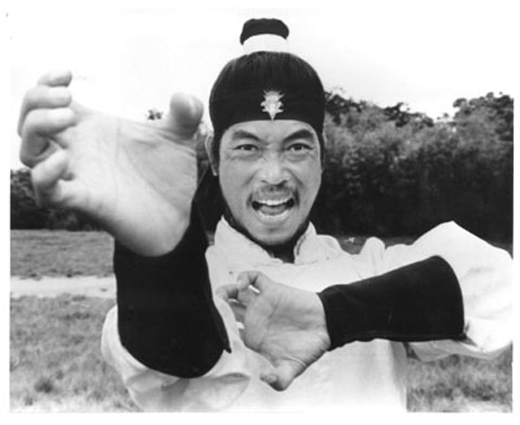
canton viper

Part of MKC's Revenge Week (July 8-14, 2013). This daily series comes courtesy of Tom Giammarco, the author of the Seen in Jeonju website, surely one of the best resources for information on classic Korean cinema on the web. Enjoy!

It was only a matter of time before I had to touch on the kung fu craze that dominated Korean action films for more than two decades. They are unavoidable when discussing revenge and Korean cinema unless you are limiting the discussion to just recent films. From the mid-60s to the late-80s, literally hundreds of these martial arts action films were created either as co-productions with Hong Kong film companies or as imitations of that popular style. The background of the movie could be different – set in the distant past the film would often be about an evil bandit or warlord and his gang that are terrorizing the countryside and who may have killed the hero’s family. Or it might be set in pre-World War II Asia where the Japanese army is moving gold or supplies through the region and the best friend of the hero’s, more likely than not working for the Independence Army, is killed fighting for a cause that the hero will pick up. Set in modern times, the movie was likely to involve drug trafficking where, once again, the family and/or friend of the hero is killed or the movie would be about two martial arts academies/temples/schools of thought that are rivals and the bad school winds up killing a student or teacher from the good school, so revenge becomes the goal of the day.

Revenge Week: Amour Noir - The Tragic Outcome of Happy End


Part of MKC's Revenge Week (July 8-14, 2013).

Amour noir as a genre in film has always been popular with Korean audiences. From as far back as Kim Ki-young’s The Housemaid (1960) to present-day period erotic thrillers like The Concubine, the archetypes and storylines found in these films have been fodder for countless melodramas, love stories and crime pictures. For those that may be unfamiliar with this unique genre subset, an amour noir encompasses unhappy marriages, adulterous spouses and an eventual conspiracy to murder.

Revenge Week: Dirty Blood's Dangerous Payback


Part of MKC's Revenge Week (July 8-14, 2013).

As a society Korea has been slow to change despite its economic growth. At times it can seem like a gigantic, perpetually simmering pot of discontent that seems dangerously close to boiling over. One aspect of Korean society that is often brushed under the carpet is repressed sexuality and while it isn’t something you will encounter much in TV dramas, music and the news, the Korean film industry, of late, has been vocal in its depiction of the widespread abuse that rages through the country. Truth be told, it is often used opportunistically and many of the works in question tread a very fine line.

Wednesday, July 10, 2013

Revenge Week: Trailers of Revenge! Day 3

Part of MKC's Revenge Week (July 8-14, 2013). This daily series comes courtesy of Tom Giammarco, the author of the Seen in Jeonju website, surely one of the best resources for information on classic Korean cinema on the web. Enjoy!

It is day three of Modern Korean Cinema's REVENGE WEEK and I continue looking back at forgotten movies of past decades where vengence plays a major role. Today's film is the awkwardly titled Report of the Daughter-in-Law's Rice Flower as it is called on the KMDb but also known as Report of Cowwheat (Daum). It is a film from 1989 directed by Ryu Jae-moo and starring Na Yeong-hee. In this film, Soon-yi has tragedy after tragedy heaped on her before she finally snaps and seeks revenge.

Revenge Week: The Dubious Revenge of To Sir, with Love (2006)


Part of MKC's Revenge Week (July 8-14, 2013).

This piece comes courtesy of Natasha Harmer, a member of the brilliant Coventry University East Asian Film Society (CUEAFS).

Is a classroom accusation of soiled underpants really a good reason to exact brutal revenge on your classmates and teacher sixteen years later? Well according to Im Dae-woong’s directorial debut To Sir, with Love (aka Bloody Reunion), it is.

Revenge Week: Seeing Devils - Violence and Revenge in Kim Jee-woon’s I Saw the Devil (Part II)


Part of MKC's Revenge Week (July 8-14, 2013).

By David Bell

Released the same year, Jang’s Bedevilled offers a more delicate approach. Hae-won, an unsympathetic Seoul bank-worker, is forced to take time off after aggressive behaviour towards a colleague and visits her childhood friend Bok-nam on the fictional island of Moo-do. Appalled by the mannerisms and cleanliness of the farming islanders, she passively bears witness to their horrific treatment of Bok-nam and murder, and denial thereof to (again) useless police, of Bok-nam’s daughter. Frustratingly, Jang persistently plays with our expectation to see Hae-won emerge from her clean middle-class apathy and intervene in Bok-nam’s suffering under the abject, conventionally Othered, islanders. But just as she previously failed to act after witnessing Bok-nam’s gang rape as a teenager by those same men as youths, Hae-won, indifferent, arranges her return to Seoul. In turn, Bok-nam’s manic massacre of the islanders takes on a decidedly, and cleverly achieved, tone of despair. Had Hae-won intervened, as her need for redemption combined with the wretched islanders’ need of punishment appeared to signpost she would, the ensuing carnage might have taken a more traditionally cathartic mode – one more in keeping with the violence performed in I Saw the Devil.

Revenge Week: Don't Cry Mommy - A Necessary Lesson Poorly Delivered


Part of MKC's Revenge Week (July 8-14, 2013).

It’s a funny thing to think you understand something and then experience it first hand, only to realize how naïve you’ve been about the subject. Truth be told, that’s happened to me a few times since arriving in Korea. Having lived in so many places before and being well versed in Korean cinema, my hubris and I felt quite comfortable in our knowledge of a country we’d never been to. My ego has taken a few digs since then but far more devastating has been my steep learning curve regarding social issues.

Revenge Week: Fatal Femininity, Masochistic Masculinity - The Films of Kim Ki-young


Part of MKC's Revenge Week (July 8-14, 2013).

“If the national cinema aesthetics of Korea are characterized by the thematic motifs of han (pent-up grief), mise-en-scenes of rural mountainous landscapes, and understated emotions that are frequently projected in the works of Shin Sang-ok and Im Kwon-Taek, Kim Ki-yong is a filmmaker who falls completely outside this framework.”

-       Kyung Hyun Kim

Words like baroque, surrealistic, erotic and horror get bandied around a lot when talking about Kim Ki-young. Though his status as an auteur and place in the Korean cinema pantheon is secure there remains a lot to be discussed about his films. Within the realm of the revenge narrative his films are unique creations tapping into our fears about family and the cultural upheavals caused by modernity. Returning to the same themes, character archetypes, storylines and images, Kim was obsessed with placing impotent men, bratty children, scorned women and matriarchs under one roof and seeing the weak and the strong clash with one another. Although not as violent as a lot of the current Korean revenge, crime and horror pictures they are nonetheless emotionally jarring and claustrophobic.

Tuesday, July 9, 2013

Revenge Week: Trailers of Revenge! Day 2


Part of MKC's Revenge Week (July 8-14, 2013). This daily series comes courtesy of Tom Giammarco, the author of the Seen in Jeonju website, surely one of the best resources for information on classic Korean cinema on the web. Enjoy!

Over the past couple of days, I have been browsing through a huge number of revenge movies and I was left with two observations. The first is that I really needed to make a working definition of what a revenge movie is to better weed through the literally hundreds of possibilities I was looking at. The second observation was that it seemed to me that the majority of films, with the major exception of the imitation Hong Kong kung fu films, the person seeking revenge was, more often than not, a woman... at least in revenge films made before the year 2000.

Revenge Week: 26 Years - The Ultimate Revenge Narrative


Part of MKC's Revenge Week (July 8-14, 2013). This is not a new piece but it just seemed too a propos not to include.

Just like anyone else, I come from a country (Ireland) with historical scars that refuse to completely fade away. The sad fact is that these days my connection with my home is tenuous at best. Nevertheless, as we approach the centenary following the Easter Rising of 1916, this terrible event that saw a group a passionate Irishman stand up to their English oppressors, only to be brutally suppressed, is still an indelible part of who I am.

Revenge Week: Seeing Devils - Violence and Revenge in Kim Jee-woon’s I Saw the Devil (Part I)


Part of MKC's Revenge Week (July 8-14, 2013). 

By David Bell

Spectacles of violence are an important aspect of modern cinema. At times they shock and appal us, at others they attract and excite. Often they are the most memorable moments of a film. To mention Park Chan-wook’s Oldboy (2003) is to remind those, who have seen it, instantly of a man slicing off his own tongue. Our uneasy relationship to screen violence can be traced from the very genesis of cinema. Thomas Edison’s 1903 film Electrocuting an Elephant showed simply that – a scene of violence, the public electrocution of an elephant. That same year Edwin S. Porter took steps with The Great Train Robbery to bring the two cinematic aspects of narrative and violence effortlessly together. Today, spectacles of violence are regularly where cinema is found at its most visceral; where the reality of our corporeal bodies is brought into line with those of the characters on screen. In some instances, it can be deeply uncomfortable; in others, massively pleasurable.

Revenge Week: Top 10 Korean Revenge Films


Part of MKC's Revenge Week (July 8-14, 2013). 

Korean cinema may not only be a purveyor of revenge fare but there's no denying the country's particular flair for churning out gripping vengeance-fuelled narratives. However, unlike gangster fare or romcoms, revenge films are a little harder to identify, especially when it comes to making a list like this. Outside of a few obvious contenders, it took a lot of ground work and research before even writing a word, as, again and again, I had to keep asking myself "does this count as a revenge film"?

Monday, July 8, 2013

Revenge Week: Trailers of Revenge! Day 1


Part of MKC's Revenge Week (July 8-14, 2013). This daily series comes courtesy of Tom Giammarco, the author of the Seen in Jeonju website, surely one of the best resources for information on classic Korean cinema on the web. Enjoy!

If you have ever read my blog, you know that I really prefer to focus on older Korean movies. When I heard about REVENGE WEEK, I initially thought I would track down some older movies with a revenge themed plot and write about them, and I still may. However, I was sidetracked by another thought. While trying to locate an appropriate film, I stumbled across a trailer for one of the movies I was considering – Janus, Lady of Fire.  In this 1987 film directed by Kim Seong-soo, (not the Kim Seong-soo still directing today), Eun-ji arrives early at a cabin where she will be meeting her soon-to-be husband but is gang-raped while waiting for him. Upon recovering, she sets out to seek out her attackers and kills them one by one in creative ways. However, before dying, one of the rapists confesses that they had been hired by her boyfriend so Eun-ji gets herself a gun and sets out to commit one final killing.

Revenge Week: A Dish Best Served Cold


Part of MKC's Revenge Week (July 8-14, 2013).

It is a popular assertion in drama and literature that revenge is a violent action committed to gain justice for a wronged party. Hamlet kills his uncle for murdering his father, the 47 ronin in the Chushingura devised an elaborate plan to avenge their fallen daimyo and the Old Testament gave us the old acorn “An eye for an eye”. Yet while this simplistic dictum has fueled many vendettas from around the world and throughout time there is never any peace for those involved. In the land of the blind the one-eyed man inherits nothing but a charred and ruined kingdom.

Revenge Week: Introduction - Seeds of Revenge


Part of MKC's Revenge Week (July 8-14, 2013).

One of the most popular trends in cinema across the world, revenge is a powerful device that triggers audience empathy and can be a great excuse to indulge in exploitation on the screen. Far be it from merely being a contrivance to allow for bloody genre cinema, the why of revenge often stretches beyond the theater. Society and history, not to mention personal expression, have led to the construction of many revenge narratives in cinema. Vengeance can take on many forms and its depiction can be a force of good, evil or any shade of grey in between. 

Revenge Week Begins!


Welcome to Revenge Week on Modern Korean Cinema! We are very excited to be featuring lots of new and exciting content from MKC team members and many new contributors throughout the next seven days as we seek to explore the bountiful theme of revenge in Korean cinema.

This page will serve as homebase for all the accumulated content that goes up during the week so please bookmark or check back to keep up with all the great stuff coming up over the next few days.

Sunday, July 7, 2013

Final NYAFF Contest


Hey New Yorkers!! We hope you're enjoying all the goodies at NYAFF. Sadly though, all good things must come to an end and here at Modern Korean Cinema our Trivia Contest must officially close. For our fourth and final trivia contest contestants get a chance to win one ticket to a screening of Juvenile Offender, an arthouse drama about a troubled teen's reunion with his mother after abandoning him 17 years ago. The screening will occur on July 11th at 6 pm. As usual. all you have to do is answer the trivia question and send it to modernkoreancinema@gmail.com before noon on the day of screening. Good like and good movie.

Saturday, July 6, 2013

New Korean Films: These Are Watching You (2013 Week 27)

Cold Eyes
(감시자들)


The Special Crime Department of the Korean police is led by Hwang Sang-jun, a detective who tracks down criminals thanks to his instinct. A new recruit, Ha Yoon-ju, who demonstrates an exceptional memory and sense of observation, joins his team. Both they must work as a team to capture a dangerous robbing organization headed by the cautious and very discreet "James."

Tuesday, July 2, 2013

NYAFF Continues On!!


Okay, so now that NYAFF is underway and our first two trivia contests have finished. Congratulations to Matthew Kiernan, Jacky Caguicla, Avi Avital, and Talia Meisel for answering the trivia questions correctly and we hope that you enjoyed your movie. Now for our third contest the prize will be a ticket for the 2:15 pm screening of The Peach Tree on July 9th.

Friday, June 28, 2013

New Korean Films: Horror Movie? Again? (2013 Week 26)

Cheer Up Mr. Lee
(힘내세요, 병헌씨)


A producer proposes to her TV station the idea of a documentary that follows the trials and tribulations of young apprentices filmmakers in their creative process. She and her team then begin to shoot all the doings of Byeong-heon. But she soon realizes the difficulty of this task. Byeong-heon drinks constantly, takes more than eight hours before starting to write the script and spends more than an hour trying different fonts for the title of the script. Moreover, he then goes out to meet his friends, a producer, cameraman and actor, all beginners, to get further drunk.

Thursday, June 27, 2013

More NYAFF Goodness!!!


Okay, so with the first NYAFF trivia contest announced yesterday and the deadline for that fast approaching MKC has a treat for all you Ryoo Seung-Wan fans in the New York area. This year Subway Cinema not only managed to score a print for the director's latest film The Berlin File as well as his 2010 crime epic The Unjust but they're also going to screen the director's martial arts fantasy film Arahan.

Wednesday, June 26, 2013

New York Asian Film Festival GIVEAWAY!!!!


June is a time when kids are let out for summer vacation and film fans can gorge on the latest genre films from Asia in the New York tri-state area. For those not already in the know the New York Asian Film Festival (NYAFF) has been held in the Big Apple since 2002. Starting off as a small local festival at small repertory theaters. NYAFF, through the help of Subway Cinema, has been steadily growing and now has become a festival that rivals even the more respected NYFF (New York Film Festival) in films screened and fan enthusiasm. Part film festival, carnivale and fan convention NYAFF has been the site that many directors have chosen to first premiere their films in North America. Not to mention the fact that the overworked staff at the NYAFF always deliver great guests like Hong Kong filmmaker Tsui Hark and actors like Choi Min-shik and Donnie Yen.

Monday, June 24, 2013

Korean Box Office: World War Z Scares Up Huge Opening (06/21-06/23, 2013)


A blockbuster came in stronger than expected this weekend, lifting the box office to a powerful 2.35 million admissions over the frame, a 50% jump over last year. Meanwhile, the news was not so great on the domestic front, as the market share shot down from 64% to 23%, as new titles continue to flounder in the marketplace.

Sunday, June 23, 2013

Edinburgh 2013: Juvenile Offender (범죄소년, 2012)


Part of Connor McMorran's coverage for MKC of the Edinburgh International Film Festival (June 19-30, 2013).

As much as we may like to think society is for the most part a well-oiled machine, there are still far too many people who slip through the cracks. Abandoned, unable to change themselves or the situation they face, they seek to reintegrate into a society which has no desire to welcome them. For most of its life, and especially since the end of World War II, film has been used to highlight and discuss the daily problems faced by those who exist on the outside of society. From the Italian neo-realists and their pleas to humanity, through to the angry white males of British kitchen sink dramas reacting violently in protest to the systems of society, film is used to give these people a voice that would otherwise go unheard.

Saturday, June 22, 2013

Edinburgh 2013: National Security (남영동 1985, 2012)


Part of Connor McMorran's coverage for MKC of the Edinburgh International Film Festival (June 19-30, 2013).

Though 2012 was an important year in Korean cinema for many reasons, one of the more interesting ones is that it saw the return of director Chung Ji-young. 2012 was essentially bookended by his two films; Unbowed was released in January, and National Security arrived at the end of November. Both films featured highly political narratives based on real life events, yet National Security struggled to bring in anywhere near the same audience numbers as Unbowed.

Edinburgh 2013: The Berlin File (베를린, 2013)


Part of Connor McMorran's coverage for MKC of the Edinburgh International Film Festival (June 19-30, 2013).

Writing in his book 'The Remasculinization of Korean Cinema', Kim Kyung Hyun discusses the male-centric narratives found in Korean cinema of the 1980s and 90s. Discussing the film Shiri (1999), he argues that “The masculinity of Shiri’s protagonist veered away from the Korean male icons of the 1980s, but it did so by simulating Hollywood action heroes.” Shiri could easily be argued as the breakthrough moment for both commercial Korean cinema and genre cinema in general, creating a wave of films which heavily copied its style. The mainstream Korean film industry has thrived off genre cinema for the past decade, with the occasional ‘well-made’ film (films which are both commercially successful and show clear artistic intent, a perfect example being Bong Joon-Ho’s Memories of Murder from 2003) thrown in for good measure.

New Korean Films: Surgeon vs. Psychiatrist (2013 Week 25)

Doctor
(닥터)


The cosmetic surgeon Choi has a perfect life: he is one of the best in his profession, and married to the perfect woman. But everything changes when he catches her in the arms of another man while coming home earlier. He will put his talents to use as he prepares a long and cruel revenge.

Friday, June 21, 2013

Edinburgh 2013: Virgin Forest (원시림, 2012)


Part of Connor McMorran's coverage for MKC of the Edinburgh International Film Festival (June 19-30, 2013).

Perhaps because of his long-term struggle with leukaemia, highly influential film theorist Andre Bazin based a lot of his ideas around the concept of death. More specifically, he argued that film could be seen as a way to embalm time, capture time and allow people to linger in the memories of others following their death, just as portraits, or embalming, had done in the past. As technology progresses at an astonishing rate, the moving image, and with it the photographic image, has become ever present in society, capturing almost anything and everything in our world.

Edinburgh 2013: Hawking (UK, 2013)


Part of Connor McMorran's coverage for MKC of the Edinburgh International Film Festival (June 19-30, 2013).

Stephen Hawking is one of the most well known scientists of our time, and he will undoubtedly go down in history as one of the greatest minds of all time. When presented with the possibility of seeing a documentary about his life, I suddenly realised that I actually knew very little about Stephen Hawking beyond his book A Brief History of Time and his long-term motor neuron disease. Documentaries serve to discuss real people and real situations, acting as much as educators as they do entertainers or pieces of art. The main problem with them is their chosen medium, as film is so easily edited and changes the way people act in front of it that it at times becomes very hard to take what is presented to the audience as ‘real’.

Edinburgh 2013: Pluto (명왕성, 2012)


Part of Connor McMorran's coverage for MKC of the Edinburgh International Film Festival (June 19-30, 2013).

We often claim that mainstream cinema becomes unbelievable in its attempts at spectacle. This is usually the case, but such statements should force us to examine exactly why we watch films in the first place. What function should films ultimately aspire to in society? Entertainment? Art? Isn't the whole thing, as I tend to think, entirely subjective? Regardless of how we feel, it may be beneficial to rethink the role of spectacle and genre cinema and its ties to reality. As humans, we make narratives about ourselves, about our lives and struggles. However, mainstream cinema demands a certain detachment from reality, as it exists in a strange reality where expected narrative resolutions allow characters to overcome almost any kind of obstacle.

Edinburgh 2013: Day II - Getting the Hang of Things


Part of Connor McMorran's coverage for MKC of the Edinburgh International Film Festival (June 19-30, 2013).

Having gained a better understanding of how a film festival operates, I used my second day to watch some films and better acquaint myself with other festival aspects like the videotheque. Getting to Edinburgh for 9AM was quite a challenge, but it was worth it to finally see Shin Su-Won’s Pluto. What was rather disappointing however, was the lack of people in the screening. It could have been the time of day, or it could have been the lack of awareness about the film itself, but whatever the reason it left me hoping that the two public screenings were well booked. Looking at the schedule for this morning, I noticed that Pluto clashed with Hideo Nakata’s latest horror The Complex and the UK/North-Korea co-production Comrade Kim Goes Flying. It seemed weird to me that three films from the same ‘niche’ were grouped together like this. I guess clashes are inevitable at any festival, film or otherwise.

Thursday, June 20, 2013

Edinburgh 2013: I Catch a Terrible Cat (こっぴどい猫, Japan) 2012


Part of Connor McMorran's coverage for MKC of the Edinburgh International Film Festival (June 19-30, 2013).

If there can be one major complaint of post-modern cinema, it is that it is far too aware. Not only of itself as a piece of cinema, but also of the limitations of genre. This can often lead to an over-eager attempt to break or push genre boundaries, or to reject genre in favour of observational, dialogue-heavy, or highly referential cinema. Thankfully, Rikiya Imaizumi’s I Catch a Terrible Cat manages to avoid such pitfalls whilst also providing a rather interesting and playful look at the romance genre.

Edinburgh 2013: Day I - First Impressions at a Film Festival


Part of Connor McMorran's coverage for MKC of the Edinburgh International Film Festival (June 19-30, 2013).

Today was the first time I had ever attended a film festival. I had always longed to go to various different ones, but for various reasons – be it price or distance – I just never managed to make them. Perhaps because of this, film festivals have always seemed like magical places to me; places where you get to see a wide range of films, some of which may never screen in the country again. I have, over the years, looked at many programmes and hoped that some company would release these films in the UK at a later date. For the most part, this never happened.

Wednesday, June 19, 2013

Breezy Rom-Com A Wedding Invitation Rings A Little Hollow (分手合约, 2013)


In the film business these days, China seems to be the word on everyone lips as its market is in the midst of a breathless expansion. However, strict quotas on foreign imports mean that only 35 international films get to share in the spoils. To get around this system, a number of foreign companies have begun co-producing films with China, though the results thus far have been mixed. The Korean media giant CJ Entertainment has been investing in the mainland for quite some time but they have just scored their biggest hit with the romantic comedy A Wedding Invitation, their first fully-produced film for the Chinese market.

Tuesday, June 18, 2013

Edinburgh 2013: Introduction to Korean Showcase


Part of Connor McMorran's coverage for MKC of the Edinburgh International Film Festival (June 19-30, 2013).

Following last year’s retrospective of the works of the long overlooked Japanese director Shinji Somai, Edinburgh International Film Festival’s artistic director Chris Fujiwara now brings focus onto two likewise overlooked aspects of global cinema: the films of Sweden and Korea. Film festivals are an interesting concept as they bring films from all over the world to one particular town or city, allowing local cineastes to explore and discover a wide variety of directors and works. Yet, unfortunately, their main flaw is often their attempt to house such a diverse range of cinematic voices over the relatively short space of one or two weeks.

Monday, June 17, 2013

Korean Box Office: Man of Steel Not Quite Great Enough for Secretly (06/14-06/16, 2013)


Business was up again this past weekend as just over 2.5 million tickets were sold, though this was largely a result of two blockbusters ducking it out for the top spot. Each scored over one million, a achievement in itself though not the first time it's happened. Meanwhile, the local market share stood at 45%, ecent given the time of year and on par with last year's figure. However, with only two Korean titles in the top 10, one wonders what that figure might look like with a stronger mix of local fare on the marquees.

Friday, June 14, 2013

New Korean Films: A Short Film Looking Up to the Big Shots (2013 Week 24)

You Are More Than Beautiful
(그녀의 연기)


The father of Cheol-soo, who lives on Jeju Island, is about to die before he seeing his son get married. To fulfill his dream, Cheol-soo calls for the help of a young woman from Seoul, Yeong-hee, who will pretend to be his fiancee. While she is brushing up on the details of their fictional story in the car, Cheol-soo receives a call informing him that his father had been found unconscious. They hurry to get to the hospital and discover the father in a coma. Yeong-hee decides to still act the lie.

Monday, June 10, 2013

Korean Box Office: Secretly Greatly Not-so-Secret in Great Debut (06/07-06/09, 2013)


The fortunes of the Korean film industry took a dramatic turn this weekend following the release of a major local film which set a slew of new records. Business was booming with almost 3 million admissions recorded over the frame, a significant jump over last year's 2.2 million and almost twice as much as last week. However, the better news was that the local market share lept to 77% (compared with 54% in 2012), following a spell when the domestic industry was having difficulty competing with Hollywood.

TitleRelease DateMarket ShareWeekendTotalScreens
1Secretly Greatly13/06/0568.90%2,064,5863,491,5071341
2Star Trek: Into Darkness (us)13/05/3011.30%284,1351,261,090412
3Horror Stories 213/06/055.60%172,776347,311337
4Furious 6 (us)13/05/223.40%97,7071,708,497291
5The Croods (us)13/05/162.60%82,563819,621272
6Olympus Has Fallen (us)13/06/052.10%60,573113,476283
7Montage13/05/161.70%50,5182,060,999297
8After Earth (us)13/05/301.20%37,122524,612270
9The Great Gatsby (us)13/05/161.00%28,7581,391,906132
10Nazuma Eleven GO (jp)13/06/050.50%16,26730,21099

Saturday, June 8, 2013

Get Ready for 'Revenge Week' on MKC!


UPDATE: Some unexpected plans have forced me to move REVENGE WEEK on MKC back two weeks. It will now take place July 8-14. Sorry for the delay but this does give everyone more time to contribute! We have already received some great stuff and plenty more is on the way. Please don't be shy and contact us if you would like to take part!

A while back we held a 'Jopok Week' on MKC, focusing on Korea's colorful output of gangster cinema. With reviews, features and guests galore, it was the most fun and engaging week we ever had. It's high time we put on a new event so I'm thrilled to announce that at the end of this month (June 24-30) it'll be 'Revenge Week' here on MKC.

Perhaps more than any other genre, the revenge thriller or drama is ubiquitous with Korean cinema, particularly in the eyes of foreign viewers, many of whom were introduced to the nation's output through classic vengeful fare such Oldboy (2003) and A Bittersweet Life (2005). From Park Chan-wook's highly stylized Vengeance Trilogy and commercial films such as The Man From Nowhere (2010) to independent films such as the austere Bedevilled (2010), there's never been a shortage of revenge-themed films in South Korean cinema.

So why does Korea produce so many revenge narratives? Many theories exist and we hope to explore these during 'Revenge Week' and maybe even throw in a few of our own.

Just like 'Jopok Week' I would like extend an invitation to anyone who would like to contribute a piece on Korean revenge films. Feel free to drop me a line at pierceconran [at] gmail [dot] com.


Reviews and features on Korean film appear regularly on Modern Korean Cinema.  For film news, external reviews, and box office analysis, take a look at the Korean Box Office UpdateKorean Cinema News and the Weekly Korean Reviews, which appear weekly on Monday, Wednesday, and Friday mornings (Korean Standard Time).

To keep up with the best in Korean film you can sign up to our RSS Feed, like us on Facebook, or follow us on Twitter.
Friday, June 7, 2013

Jeonju 2013: Experimental Echo of Dragon Explores Myths and Emotion (용문, 2013)


Part of MKC's coverage of the 14th Jeonju International Film Festival.

When it comes to what we expect to see on screen, it’s worth considering sometimes just how strict we can be. Though we demand filmmakers to be creative, our definition of originality is actually quite narrow. As the lights dim and projectors roll, we wait for characters to show up and guide us along through their world and regale, sadden or shock us with their stories. Like many others I often lament the lack of ingenuity that plagues much of modern cinema but stick me in front of a film that does away with all standard forms of narrative (as we know them today) and suddenly I’m at a loss to process what’s unspooling before me.

New Korean Films: North Korean Spy To Save South Korean Market (2013 Week 23)

Secretly Greatly
(은밀하게 위대하게)


Ryu-hwan is a North Korean elite spy trained to kill. He was sent two years ago as a sleeper agent in Seoul. He lives in a small apartment owned by an old lady, for whom he also works. He knows everyone in the neighborhood but is only seen as that naive young guy with the mind of a child. Suddenly two other spies arrive in the area: Hae-rang pretends to be a rookie guitar player in a rock band, and Hae-jin a regular student. Ryu-hwan helps them to settle and get used to their new life, until they are ordered to commit suicide after a change of power in North Korea.

Tuesday, June 4, 2013

MKC Thought Leaders' Corner: North Korea in South Korean Cinema (May 2013)


North Korea has been in the news a lot lately for its latest round of belligerent actions. Many believe that Western media has been exaggerating the danger the communist state poses to South Korea's national security. I can't say that I've noticed any especial alarm among the local populace yet there's no denying that the oppressive regime casts a long shadow over the country. Cinema is just one of the places where this is readily evident, so this month I asked the experts:

Has Korean cinema's representation of North Korea changed over the years?

Monday, June 3, 2013

Korean Box Office: Star Trek Leads Hollywood Onslaught (05/31-06/02, 2013)


Local fare continues to be overwhelmed at the Korean box office as it scored a meagre 17% market share compared with a much healthier 54% last year. What's more, despite a number of blockbusters on offer, business was also down with only 1.69 million tickets sold overall, down from 2012's 2.04 million during the same weekend.